

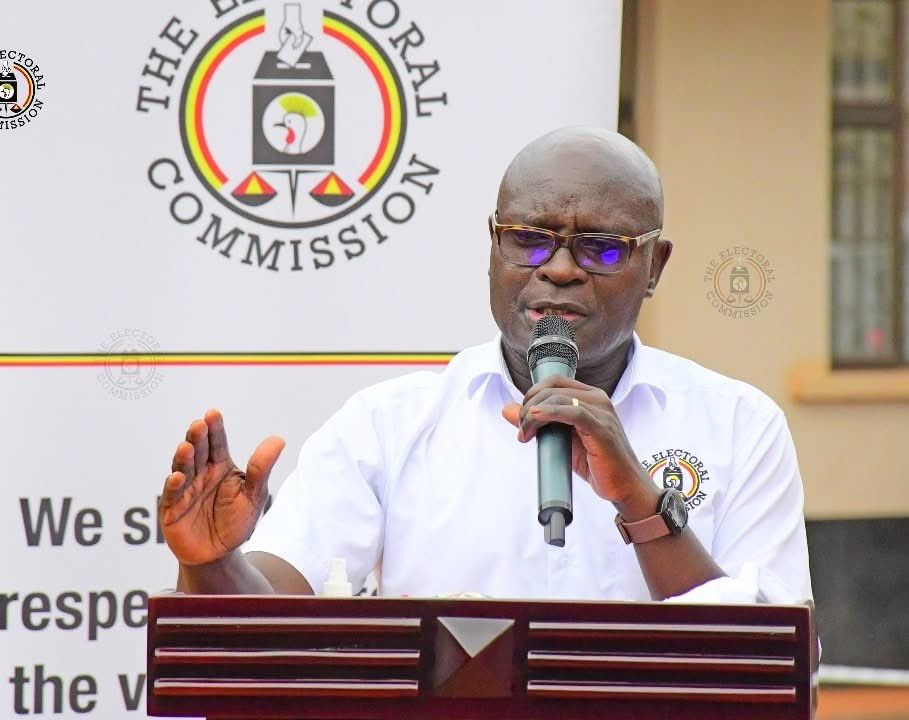
The Electoral Commission chairperson, Justice Simon Byabakama, has advised candidates and parties dissatisfied with the outcome of the recently concluded general elections to seek redress through the courts, saying the commission’s mandate ends once results are declared.
Justice Byabakama made the remarks amid mounting criticism of the Electoral Commission, with some stakeholders accusing the body of falling short of its mandate due to alleged irregularities, including false declarations and theft of declaration forms.
Critics of the electoral process have continued to fault the commission for what they describe as mishandling of the polls, pointing to reports of ballot tampering, compromised returning officers, and errors in result declaration.
However, speaking in an interview with NBS, Justice Byabakama said the commission was satisfied that it had conducted what he described as the most peaceful elections.
“I want to commend Ugandans for exhibiting good discipline during the exercise,” he said.
Justice Byabakama confirmed that the commission is reviewing allegations of malpractice and false declarations, noting that investigations are ongoing and that action will be taken once sufficient evidence is gathered.
“As of now I can’t authoritatively tell you, but we are gathering evidence across the country. Once the team is done, we shall brief the country on the magnitude and also the action to be taken on the errant officers we find to have participated,” he said.
He said candidates claiming to have been rigged should pursue their grievances in courts of law, stressing that the commission’s role is limited to managing disputes before and during polling.
“Our role as the Electoral Commission stops during polling day once declarations are done. It becomes a matter for court, and I want to encourage those with grievances to run to court for adjudication,” he said.
Justice Byabakama also addressed concerns surrounding the failure of biometric voter verification kits during the presidential and parliamentary elections held on January 15, saying investigations are underway to establish why the technology malfunctioned on that day.
“I got reports that in most parts of the country the kits worked. Moving forward, all elections will be electronic. However, we are still investigating to find out why on the first day, when we were voting for president and Members of Parliament, the kits failed and then worked during the other elections,” he said.
Many candidates at various levels of the general elections have questioned the credibility of the results, raising concerns about the integrity of the polls.
Justice Byabakama, however, welcomed the decision by former presidential candidate Robert Kasibante to withdraw his election petition, describing it as a positive step towards peace and rebuilding trust in the Electoral Commission.
Uganda has a long history of contested elections, with five of the country’s last seven presidential polls challenged in court. Similar disputes have also arisen at parliamentary and local government levels.
